The State of Automation in 2025: Why I Left Zapier for n8n
A developer's honest look at the automation landscape. When to use Zapier, when to use Make, and why self-hosting n8n is the endgame for builders.
If you write code for a living (or even just for fun), you eventually hit a wall with standard automation tools.
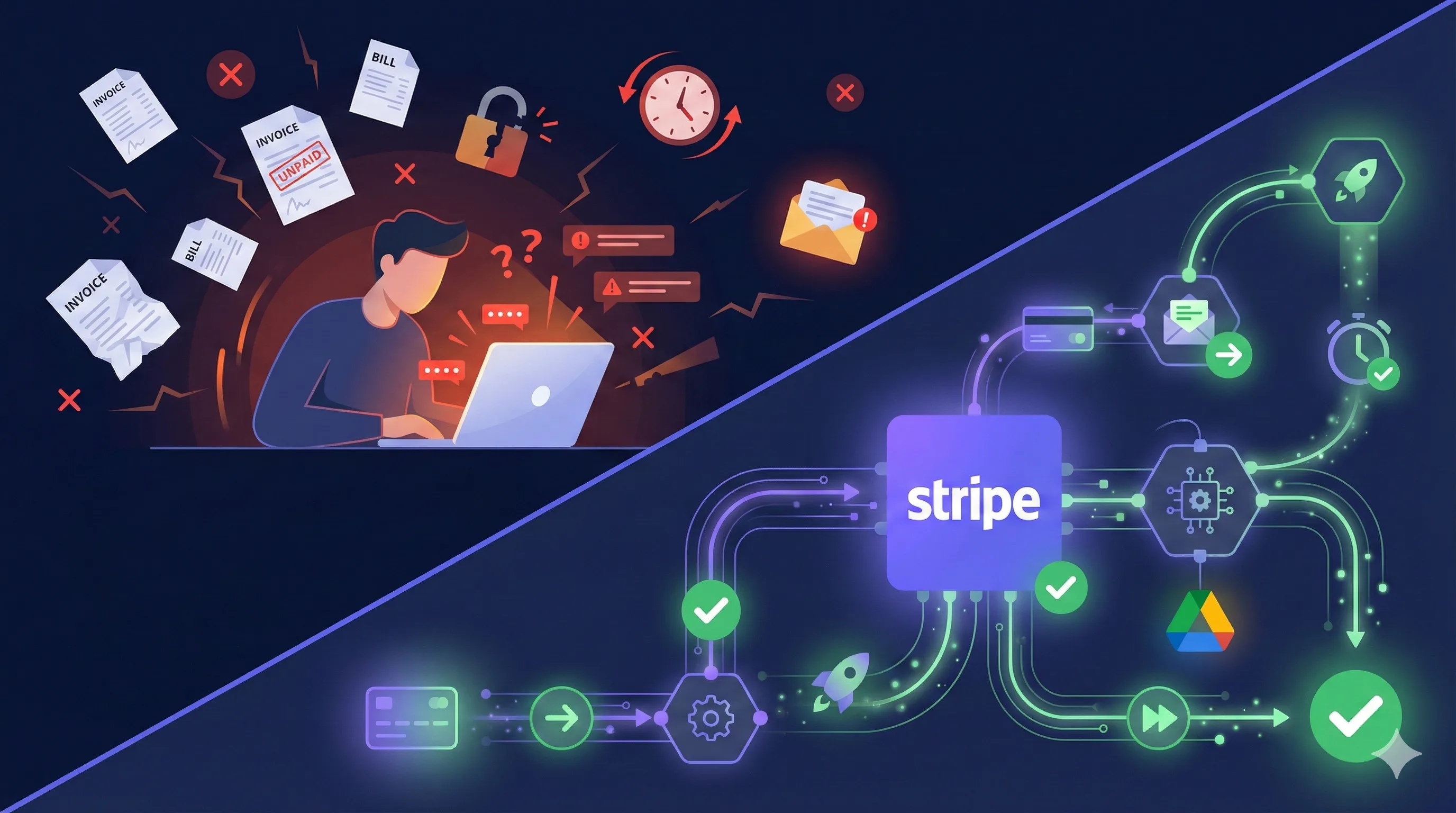
It usually happens like this: You build a simple workflow to save email attachments to Dropbox. It works great. Then you add a few more steps. Then you try to parse a JSON object. Suddenly, you are paying $50 a month for a "Pro" plan, and you still can't execute a simple custom Javascript function without jumping through hoops.
I spent years using every tool on the market. Here is my honest take on the current state of automation and why I eventually moved my entire infrastructure to self-hosted n8n.
The Big Three: A Developer's Perspective
1. Zapier: The "Apple" of Automation
Zapier is incredible at one thing: Onboarding. If I need to tell a non-technical client how to connect a Google Form to Slack, I send them a Zapier link. It just works.
But for developers? It's painful.
- The Cost: Their pricing model scales linearly with your success. The more you automate, the more you are punished.
- The "Black Box": Debugging complex logic in Zapier feels like trying to fix a car engine through the tailpipe. You can't easily see the data flow or transform payloads mid-stream without paying extra for "Formatter" steps.
2. Make (formerly Integromat): The Visual Powerhouse
Make is fantastic. It was the first tool that let me visualize logic with actual flowcharts instead of a linear list. It handles arrays and data transformation significantly better than Zapier.
I still use Make for quick prototypes or for clients who want a visual dashboard but don't want to manage a server. But it suffers from the same SaaS trap: Operation Limits. If you build a loop that processes 1,000 rows in a spreadsheet, you just burned 1,000 operations in 30 seconds.
3. n8n: The "Linux" of Automation
Then I found n8n. It was the only tool that treated automation like software development, not a product feature.
Why I Bet My Stack on n8n
1. It's an Application, Not a Service
This is the biggest mental shift. With n8n, I am not renting an account on someone else's computer. I am running an application on my own infrastructure.
This means:
- Privacy: My receipts, my API keys, and my customer data never leave my server. This is non-negotiable for the financial workflows I build.
- No Rate Limits: If I want to process 10,000 rows, the only limit is my CPU usage. I don't have to stress about "saving tasks" to lower my bill.
2. First-Class Developer Tools
In n8n, the "Code" node isn't an afterthought. It's a first-class citizen. I can write standard JavaScript (and now Python), import npm packages, and manipulate data exactly how I want.
If a node doesn't exist for a specific API, I don't have to wait for the platform to build it. I just drag in an HTTP Request node and read the API docs myself.
3. The "Agent" Era
We are moving past simple "Trigger -> Action" automations. The future is AI Agents—systems that can reason, loop, and make decisions.
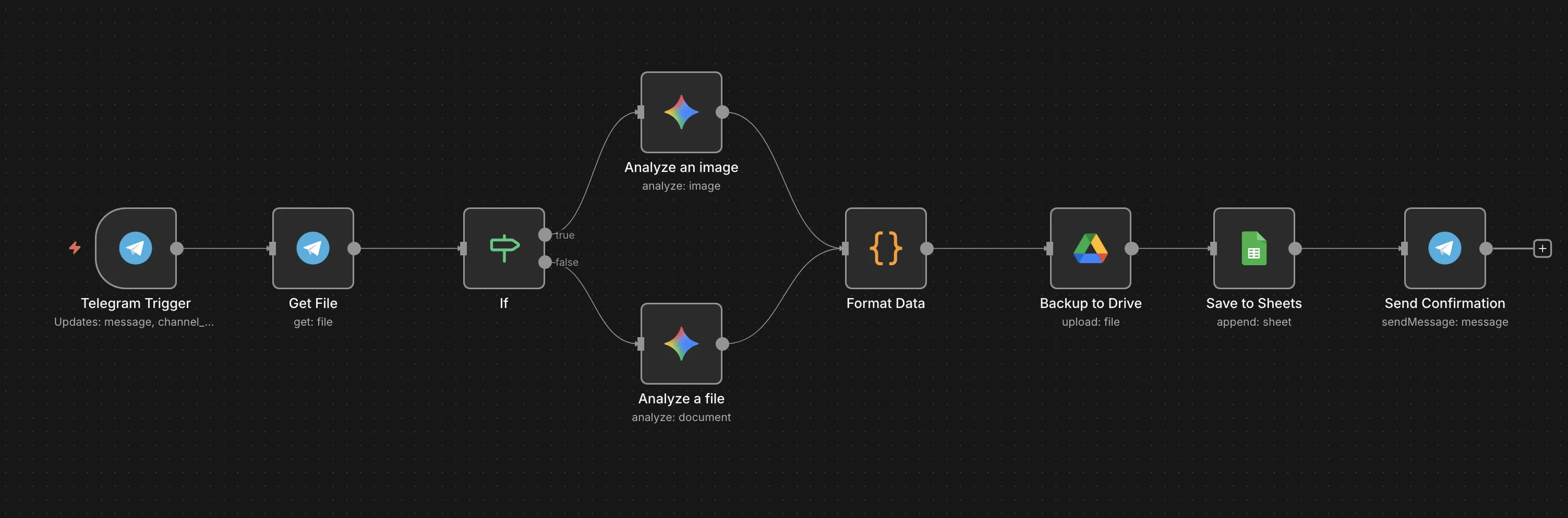
n8n is miles ahead here. Their integration with LangChain allows me to build autonomous agents that can use tools (like Google Search or a Calculator) to solve problems. My Receipt Organizer isn't just a script; it's a multimodal pipeline that "looks" at files and decides how to handle them based on content.
Conclusion
If you are a business owner who just wants leads to go into a CRM, use Zapier. It's worth the premium for the peace of mind.
If you are a "visual thinker" building complex logic but don't want to touch a server, use Make.
But if you are a builder—if you want to own your rails, keep your data private, and build systems that scale without a credit card limit—spin up a Docker container and learn n8n. You won't look back.